Regulatory Influences on Blending Live Table Interactions with Prize Pool Systems in Portable Gaming Environments
Kirjoittanut Otto Lange · 28.9.2026

Regulatory Influences on Blending Live Table Interactions with Prize Pool Systems in Portable Gaming Environments
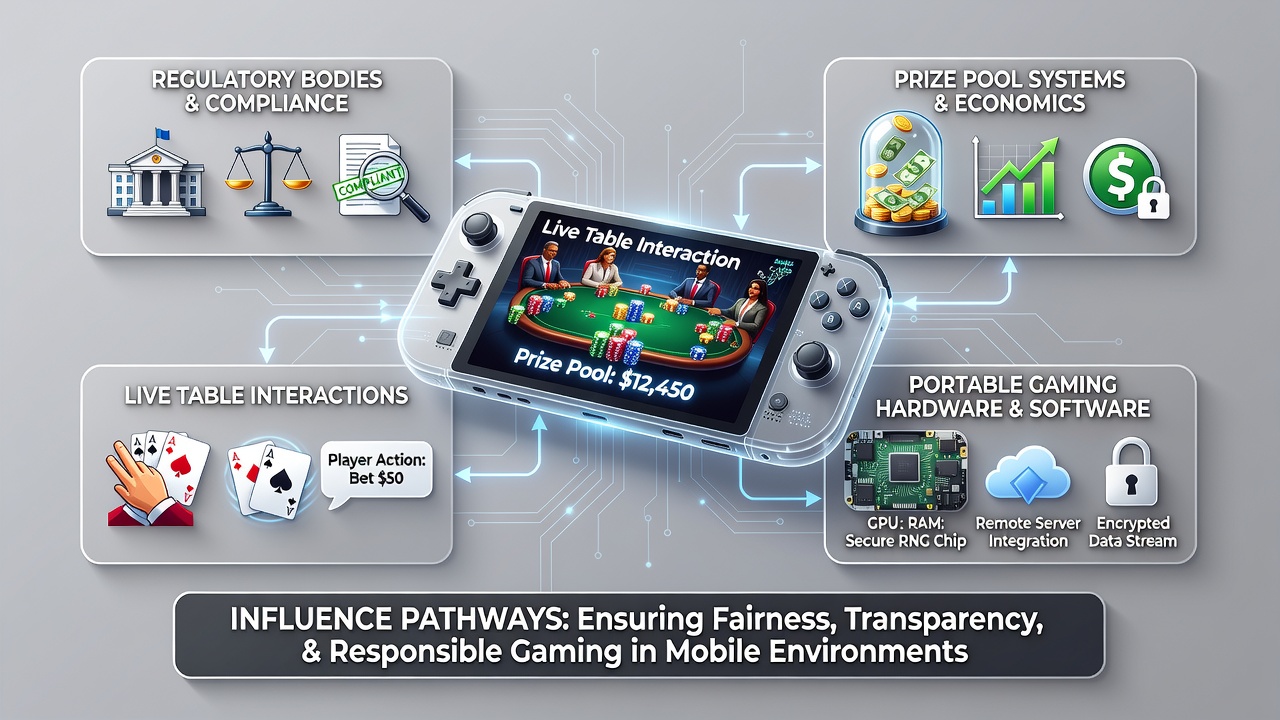
Regulatory frameworks across multiple jurisdictions shape how live table interactions combine with prize pool systems inside portable gaming environments, and these rules address licensing requirements, technical standards, and player protection measures that operators must follow when integrating real-time dealer feeds with accumulating reward mechanisms. Data from industry reports shows that mobile platforms face stricter scrutiny when prize pools draw from both live table wagers and digital contributions, because regulators require clear separation between chance-based elements and skill-influenced decisions to maintain fairness across devices.
Core Regulatory Principles Governing Integration
Authorities in various regions mandate that live dealer streams operate under certified software protocols while prize pools undergo separate randomization audits, and this separation prevents any single point of failure from affecting both interactive tables and pooled rewards. Observers note that portable environments add layers of complexity since network latency can influence real-time decisions yet must not alter prize distribution algorithms, which leads regulators to enforce synchronized logging systems that record every player action and pool contribution simultaneously.
Technical standards typically require operators to demonstrate that live table feeds remain independent from prize pool calculations, and compliance often involves third-party testing laboratories that verify no cross-contamination occurs between video streams and jackpot accumulators. Figures reveal that jurisdictions such as those overseen by the Pennsylvania Gaming Control Board have updated guidelines to cover these blended systems, emphasizing continuous monitoring rather than periodic checks alone.
Regional Variations in Oversight Approaches
European regulators focus on consumer protection directives that cover data flows between live sessions and prize mechanics, whereas North American state-level bodies prioritize licensing conditions that tie mobile approval to specific hardware certifications. Australian frameworks, guided by the Australian Communications and Media Authority, examine how cross-border prize pools interact with local live table offerings, and these rules demand transparent reporting on fund allocation to prevent commingling of player contributions across international boundaries.
Studies conducted by academic institutions indicate that operators who align their mobile architectures with these varying standards achieve smoother market entry, while those who delay compliance encounter extended approval timelines. What's interesting is how September 2026 brings scheduled updates to several technical interoperability standards that will require enhanced encryption for live feeds paired with prize pool ledgers, forcing portable platforms to adopt unified security architectures ahead of enforcement dates.
Technical Compliance and Testing Requirements
Certification processes now incorporate stress tests that simulate high-volume live table traffic combined with rapid prize pool fluctuations, and these evaluations ensure mobile applications maintain integrity under peak loads. Researchers have documented that successful integration depends on modular code structures allowing independent updates to dealer interfaces without recalibrating entire prize distribution engines, and this modularity reduces downtime during regulatory audits.
Operators often collaborate with testing houses to produce documentation showing how player inputs from live tables feed into pool calculations only after regulatory-approved delays, and such measures address concerns about real-time manipulation. Evidence suggests that clear audit trails become essential when prize pools span multiple live variants, because regulators demand traceability from each wager through to final distributions.
Player Protection Measures in Blended Systems
Rules frequently require responsible gaming tools to apply uniformly across live interactions and prize pool participation, which means session limits and reality checks must function consistently whether players engage with dealers or monitor accumulating rewards. Data indicates that portable environments receive particular attention because users switch between devices more fluidly, prompting regulators to mandate persistent account controls that travel across sessions.
Industry associations such as the European Gaming and Betting Association have published guidance on harmonizing these protections, and their recommendations influence how operators design interfaces that display both live table status and current prize pool levels without overwhelming users. Compliance reports show that transparent disclosure of contribution percentages from live play into pools helps maintain trust while satisfying oversight bodies.
Future Developments and Scheduled Updates
Announcements from multiple regulatory bodies point toward enhanced international cooperation on standards effective around September 2026, and these changes aim to streamline certification for blended live and prize systems across borders. Observers expect increased emphasis on real-time analytics that flag unusual patterns in both table interactions and pool growth, thereby strengthening preventive oversight.
Portable gaming environments stand to benefit from these coordinated efforts because unified reporting formats reduce duplication across jurisdictions, and operators gain clearer pathways for scaling live table features alongside dynamic prize mechanisms. Research indicates that early adoption of forthcoming technical specifications positions platforms favorably for multi-region operations once the updates activate.
Conclusion
Regulatory influences continue to define the boundaries within which live table interactions merge with prize pool systems in portable gaming environments, and compliance remains central to sustainable operations across global markets. Ongoing developments through 2026 and beyond will further refine these requirements as technology and oversight practices evolve in tandem.